
New white paper
Europe Just Changed the Rules of Global Business
The EU is replacing company-wide sustainability reports with product-level proof, and those rules reach every company that sells into Europe.

- Which EU rules now make verified product data a condition of selling in Europe
- Why companies without verified data get judged on default values designed to cost them more
- How the same requests travel through global supply chains, and which governments are following
What's inside
Six Sections On The Rules Now Reshaping Global Trade
From why the EU changed its rules to how they reach companies worldwide, each explained in plain language, with sources.
Global Investment And EU Rules Now Drive Demand
From Project Independence to the Brussels Effect.
Trading Company Data For Product Proof
Verified Data Is The Price Of Market Entry
EU Rules Travel Through Global Supply Chains
LCA In Practice: Two Case Studies
Conclusion: Proof Travels
LCA Results Already Speak The Language Of The New Rules
Two Boundless assessments, built to the methods regulators and buyers already require.
Chemical recycling
~2.27 kg
CO₂e potentially avoided per kilogram of circular naphtha, compared with fossil naphtha.
Made from unsorted plastic waste that conventional recycling rejects. The study used the European Commission’s own Environmental Footprint method, so the results line up with EU packaging targets for recycled content, which begin in 2030.
Low-carbon fertilizer
~13%
Lower greenhouse gas emissions per kilogram of nitrogen than conventional fertilizer, using less than half the fossil energy.
Fertilizer is one of the products CBAM charges at the EU border. The independently reviewed LCA also found higher water use, caused by hydropower in the electricity supply. Switching to wind power would cut both water use and emissions, a tradeoff a carbon-only number would miss.
Quick answers
Questions This Paper Answers
We don’t sell directly in Europe. Do these rules affect us?
Yes, if your customers sell there. EU product rules follow the product, so the request usually arrives from an EU importer or buyer asking for your emissions data. The white paper shows how these requests travel through global supply chains.
The CSRD no longer applies to us. Are we done?
Probably not. The EU dropped mandatory reporting for about 90% of companies, and its product rules got stricter at the same time. The paper covers the five EU rules that now ask for product-level data.
What happens if we can’t provide verified emissions data under CBAM?
Your customer pays on EU default values, which carry a markup that grows each year. The paper lays out the markup year by year through 2028.
Our suppliers are small. Can they refuse data requests?
Suppliers below 1,000 employees can now turn down reporting questionnaires. Their customers still owe CBAM at the EU border, and the paper explains why that keeps the data requests coming.
Are other countries adopting similar rules?
Yes. The UK and Norway start carbon border charges in January 2027, and China, India, Japan, Australia, Brazil, and eight U.S. states are building rules of their own. The paper maps each one.

Get The White Paper
Note from our founder
Why We Built LifeCycle IQ
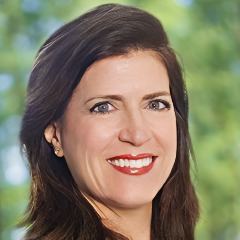
Michele Demers
Founder & CEO, Boundless Impact Research & Analytics
I started LifeCycle IQ because I kept watching good companies get stuck between two bad options.
A quick carbon calculator could give them a number in an afternoon, but it fell apart the moment a customer, an investor, or a regulator asked how it was built. A full ISO-compliant study held up under scrutiny, but it cost fifty to a hundred thousand dollars and took months, often long after the material or supplier decision it was meant to inform had already been made.
Neither option matched how these decisions actually get made. Product and supply chain choices happen continuously, across dozens of materials and suppliers, usually with a cost number from one team and a sustainability number from another. Nobody had built a tool that kept up with that pace while still holding up to real scrutiny.
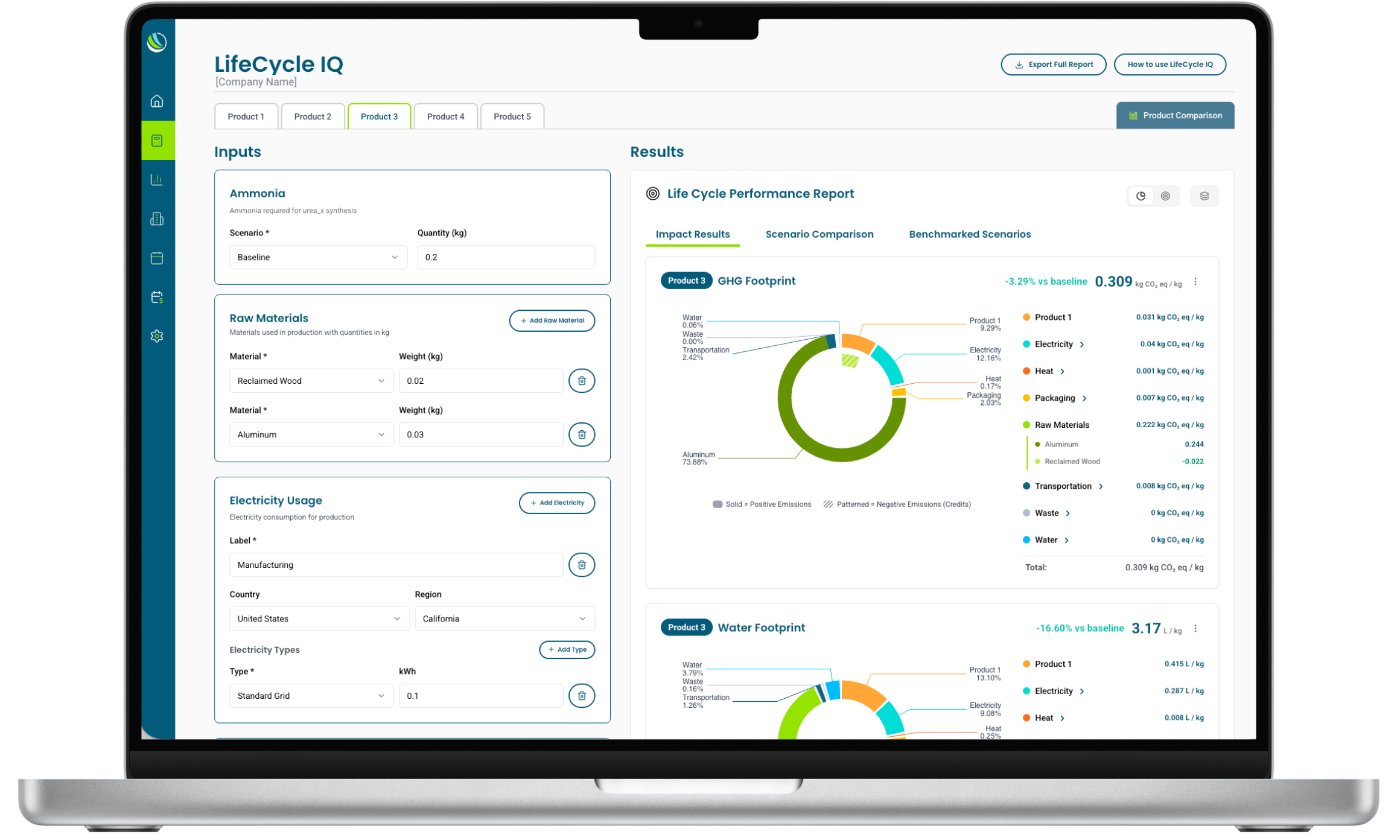
That is what LifeCycle IQ is. It is not a report you commission once and file away. It is a model built to ISO 14040 and 14044 standards that stays live as your suppliers and materials change, with cost data and sustainability data in the same place, because in our experience they were never really separate numbers to begin with.
We built it for the people who have to make the material or supplier call and then defend it, on both cost and sustainability grounds, often before all the data is perfect. That defensibility, delivered fast enough to actually inform the decision, is the whole point.
If that is the position you are in, I would like to hear about it.

Founder & CEO
About LifeCycle IQ
Life Cycle Assessment, Reimagined As A Decision Tool
Most LCAs are built to satisfy a request, then sit in a folder. LifeCycle IQ is built to be used. It puts LCA and cost analysis in one model, so you can swap a supplier, change a material, or shift volume and see what happens to sustainability footprint, cost, and risk before you commit.
Every model follows ISO 14040 and 14044 and documents where company data, secondary datasets, and estimates are used, so the evidence behind a number is traceable when a regulator, customs authority, or buyer asks for it. And because the model updates as your product and the rules change, it’s still right next quarter.
About Boundless
An Industry Research and Impact Analytics Firm, Since 2013
Boundless is an industry research and environmental impact analytics firm that provides objective, actionable insights to accelerate investment toward clean technologies and companies driving positive environmental change. We employ a science-based, data-driven approach grounded in the proven methodologies of LCA and Techno-Economic Analysis.
Our approach emphasizes close collaboration with customers, so models and analyses stay representative of their specific systems, products, and operational realities. The scores and metrics we produce are robust and decision-relevant, supported by independent validation from external industry and scientific experts.